
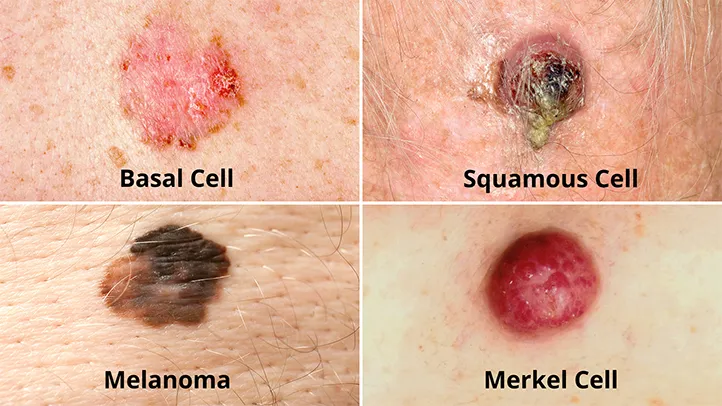
Skin cancers are cancers that arise from the skin. These cancers are caused by the development of abnormal cells that have the ability to invade or spread to other parts of the body. More than 90% of causes are due to exposure to ultraviolet radiation from the sun. This exposure increases the risk of all 3 main types of skin cancer.
Decreasing exposure to ultraviolet radiation and the use of sunscreen appear to be effective methods to prevent melanoma and squamous-cell skin cancer. It isn’t clear whether sunscreen affects the risk of basal-cell cancer. Non-melanoma skin cancer is treated in different ways.
The treatment recommended by doctors depend on:
- The type, size, location of the cancer
- Your general health
- Any medicine you take at the moment (some medicine might increase of bleeding after surgery)
Skin cancer is the most common form of cancer, caucasians in Australia and New Zealand have the highest rates of melanoma in the world. Basal Cell Carcinoma and Squamous Cell Cancer often carry a UV-signature mutation indicating that these cancers are caused by UVB radiation via direct DNA damage. However, Melanoma is mainly caused by UVA radiation by means of indirect DNA damage.
Protocols of Bali’s Health Care Center (BHCC) for Skin Cancer
- Ozone Therapy: Helps to induce Reactive Oxygen Species (ROS) Anti-Cancer Effects, Helps to exhibit Selective Toxicity in Cancer Cells, Helps to induce cancer cell death by causing mitochondrial disruption
Helps to Trigger G2/M Cell Cycle Arrest of Cancer Cells, Have Synergistic Effect with Medical Treatment and Helps to Minimize Medical Treatment’s Side Effects.
3. Dome Germanium Treatment: Helps to improve immune system
4. Hydrocolon Therapy: Helps to stimulate peristalsis and immune function, Helps to break down hardened fecal matter, Helps to purges parasites
5. Car T Cell Therapy
Research of Tian Xian Liquid (TXL) Towards Skin Cancer

TXL has been used in international market for cancer patients since 1991. Today, the research of TXL has produced 26 research articles that are published in international journal, including 2 clinical trials (one for Breast Cancer in Taiwan National Hospital and the other for Nasopharyngeal Cancer in Dharmais Cancer Hospital Jakarta). TXL has also made it to the dictionary of American National Cancer Institute (NCI).

According to the entry, TXL (or THL in Taiwanese pronounciation), has potential antioxidant, immunomodulating and anti-neoplastic (anti-cancer) activities. The immunomodulating function includes modulating the activity of Natural Killer (NK) cells and Cytotoxic T-Lymphocytes (CTLs).
In summary, here’s a couple of TXL’s functions:
1. Helps to Induce Apoptosis (Programmed Cell Death) of Prostate Cancer Cells
In 2005, the research of Andy Sun’s team from National Taiwan University regarding TXL’s ability to inhibit cancer cell growth and induces apoptosis (programmed cell death) in a wide variety of human cancer cells was published by the Journal of Alternative & Complementary Medicine.
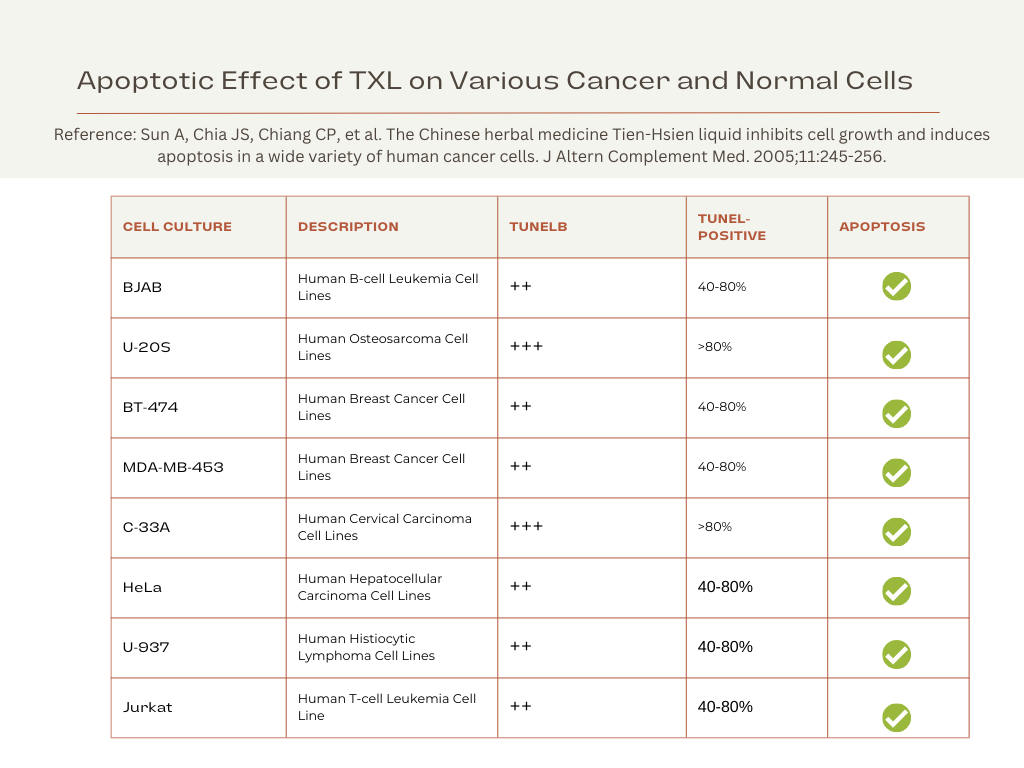
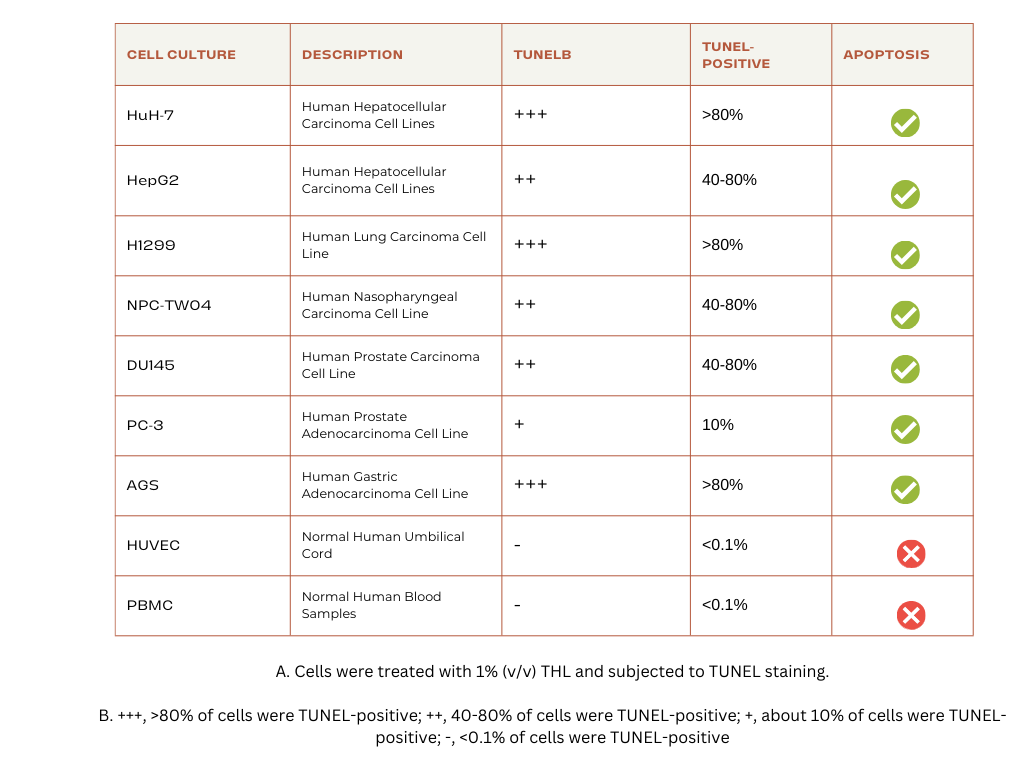
Results: TXL could induce apoptosis in all human cancer cell lines tested but not in normal human cells. THL treatment of H1299 cancer cells resulted in activation of caspase-8, -9, and -3 and the inhibitors of these caspases could partially block TXL-induced apoptosis.
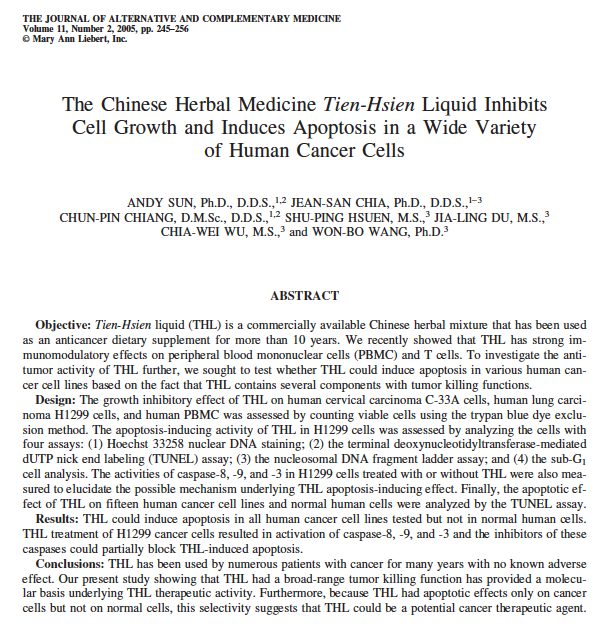
The research found that TXL induces apoptosis (programmed cell death) in a wide variety of human cancer cells, including Human Prostate Carcinoma.
2. Helps to Trigger G2/M Cell Cycle Arrest of Cancer Cells
3. Have Synergistic Effect with Medical Treatment and Helps to Minimize Medical Treatment’s Side Effects. Helps to Improve Patients’ Quality of Life
4. Helps to Inhibit Metastasis and Angiogenesis of Cancer Cells
5. Helps to Modulate Immune System (Natural Killer Cells and Cytotoxic T-Lymphocytes)