
Ozone Therapy refers to alternative treatment that introduces ozone or ozonides to the body. The Ozone gas is usually mixed with oxygen, liquid, and administered through the body through vagina, rectum, or directly to the bloodstream via vein. Ozone can also be introduced via autohemotherapy, in which blood is drawn from the patient, exposed to ozone gas, and re-injected into the patient’s vein. The Autohemotherapy application of ozone has been used for 4 decades with encouraging results to generate a controlled stress response of therapeutic relevance in some immune dysfunctions and chronic, degenerative conditions.
The healing properties of ozone gas have been used as adjunct therapy for a wide range of disease treatments, including cardiovascular disease, cancer, osteoarthritis, herniated disc, chronic wounds, stroke etc. Bali’s Health Care Center Clinic uses the most advanced kind of Ozone Therapy, namely Extracorporeal Blood Oxygenation & Ozonation (EBOO). EBOO is performed with a high-efficiency apparatus that makes it possible to treat with a mixture of oxygen-ozone (0.5-1 microgram/ml oxygen) in 1 hour of extracorporeal circulation up to 4,800 ml of heparinized blood without technical or clinical problems, whereas only 250 ml of blood can be treated with ozone by AHT.
The standard therapeutic cycle of EBOO lasts for 7 weeks in which 14 treatment sessions of 1 hour are performed. After a session of EBOO, the interaction of ozone with blood components results in 4-5-fold increased levels of thiobarbituric acid reactants and a proportional decrease in plasma protein thiols without any appreciable erythrocyte haemolysis. The clinical experience gained so far confirms the great therapeutic potential of EBOO in patients with severe peripheral arterial disease, cancer, coronary disease, cholesterol embolism, severe dyslipidemia, Madelung disease, and sudden deafness of vascular origin.
Research of Ozone Therapy towards Cancer
1. Ozone Induces Reactive Oxygen Species (ROS) Anti-Cancer Effects
Ozone therapy exerts a range of effects when interacting with immune system, including the activation of immune responses, regulation of cytokine production, and modulation of inflammatory processes. The effects of ozone on macrophages, T cells, B cells, NK cells, and dendritic cells can be used in the treatment of infectious diseases, autoimmune disorders, and cancer immunotherapy. In clinical use, ozone therapy not only increases leukocyte activity and the immunoglobulin G (IgG) level in patients with selective immunoglobulin A deficiency, but ozone has also been shown to increase the production of both IL-8 and tumor necrosis factor alpha (TNF-α) in a human monocytic cell line (THP-1 cell) model.
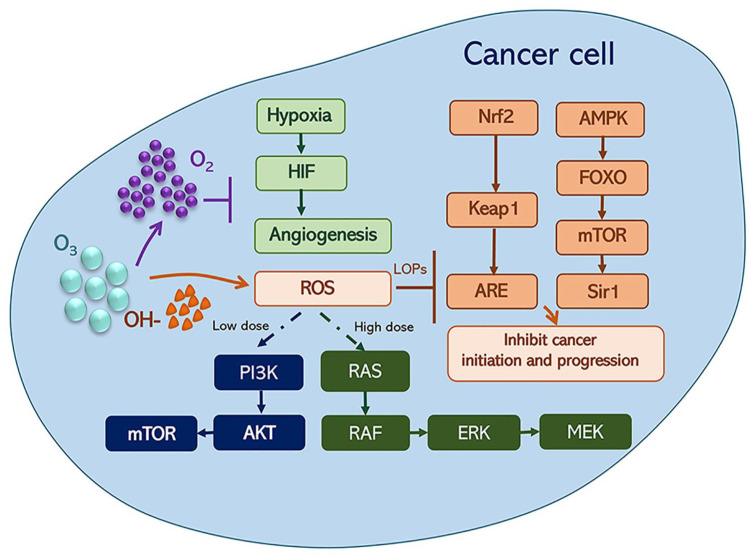
In Figure1, Ozone (O3) can generate hydroxyl radical (OH−) and oxygen (O2), which could have anticancer effects by inducing reactive oxygen species (ROS) anticancer effect and relieving hypoxia. Light green labels: Oxygen relieves hypoxia. Hypoxia inhibits hypoxia-inducible factor (HIF) generation and angiogenesis; Brown labels: OH−-associated high-level ROS can block the activation of the Nrf2/Keap1/ARE and AMPK/FOXO/mTOR/Sir1 pathways. Dark blue labels: Low doses of ROS activate the PI3K/Akt pathway; Dark green labels: High doses of ROS can trigger MAPK-dependent apoptosis.
Abbreviations: AMPK, adenosine monophosphate-activated protein kinase; ARE, antioxidant response element; ERK, extracellular signal-regulated kinase; FOXO, forkhead box O; HIF, hypoxia-inducible factor; Keap1, Kelch-like ECH-associated protein 1; LOPs, lipid oxidation products; MEK, mitogen-activated protein kinase kinase; mTOR, mammalian target of rapamycin; Nrf2, nuclear factor erythroid 2–related factor 2; PI3K, phosphatidylinositol-3-kinase; RAF, rapidly accelerated fibrosarcoma kinase; RAS, rat sarcoma; ROS, reactive oxygen species; Sir1, Saccharomyces cerevisiae protein.
Due to its immunomodulatory and anti-inflammatory effects, ozone affects the tumor microenvironment (TME), which plays a critical role in cancer initiation, progression, and response to therapy. Ozone affects the TME by influencing immune cells, cytokine production, angiogenesis, and extracellular matrix remodeling. Thus, understanding the immunomodulatory effects of ozone therapy could facilitate its integration into disease management, either as a standalone therapy or as an adjuvant to existing therapy.
 Moreover, Ozone also modulates pro- and anti-angiogenic factors, influences endothelial cells, remodels the extracellular matrix, and regulates angiogenesis by modulating vascular endothelial growth factor (VEGF) expression, which offers potential therapeutic benefits in wound healing, ischemic conditions, and tissue regeneration.
2. Ozone Therapy Exhibits Selective Toxicity in Cancer Cells
Cancer cells’ selective vulnerability to ozone-induced ROS lies in their diminished antioxidant capacity. Unlike normal cells, which possess a robust antioxidant defense system, cancer cells often lack sufficient levels of enzymes like SOD and catalase, which neutralize ROS. This deficiency makes them more susceptible to the oxidative effects of ozone, while healthy cells can typically withstand low to moderate levels of oxidative stress.
Studies have demonstrated that ozone exposure leads to a concentration- dependent increase in ROS within cancer cells, resulting in oxidative damage that triggers apoptosis. Apoptosis, or programmed cell death, is a controlled process that eliminates damaged cells without causing inflammation—a critical advantage in the tumor microenvironment, where uncontrolled cell death can exacerbate disease progression.
3. Mitochondrial Impact & Apoptosis
Ozone induces cell death by causing mitochondrial disruption. The mitochondria are critical for energy production in cells, and their membranes are particularly sensitive to oxidative damage. When ROS levels rise, they can compromise the mitochondrial membrane potential, leading to the release of pro-apoptotic factors like cytochrome c. Once in the cytosol, cytochrome c activates caspase enzymes, which break down cellular components and ultimately lead to apoptosis.
This mitochondrial-targeting effect of ozone is particularly effective against cancer cells, which depend on altered mitochondrial function to sustain their rapid growth. By targeting and disrupting these energy-producing organelles, ozone therapy impairs cancer cell proliferation while sparing healthy cells that can restore their mitochondrial function more efficiently.
High-dose ozone therapy induces apoptosis across a variety of cancer cell types, including breast, lung, colorectal, and cervical cancers. This apoptotic process is initiated by elevated levels of ROS, which cause oxidative damage to cellular membranes, proteins, and nucleic acids. In studies on breast cancer cell lines, ozone exposure resulted in dose- dependent cell death, with higher concentrations of ozone generating more substantial ROS production and apoptosis. These findings align with similar observations in lung cancer and melanoma cells, where ozone-induced apoptosis has been shown to limit cancer cell proliferation without affecting surrounding healthy tissue.
4. Synergy with Chemotherapy
Ozone’s synergy with chemotherapy drugs like cisplatin and 5-fluorouracil has notable benefits, as it enhances drug uptake in cancer cells and amplifies cytotoxic effects. This synergy is especially valuable in patients who experience severe side effects from high doses of chemotherapy. By integrating ozone therapy, clinicians may be able to reduce the dosage of chemotherapy drugs, mitigating adverse effects while maintaining therapeutic efficacy. In clinical studies on cervical cancer, patients receiving combined ozone and radiotherapy exhibited significant reductions in tumor volume and lower gastrointestinal toxicity compared to those receiving radiotherapy alone.
In vitro studies on colorectal cancer cells have shown that ozone therapy enhances the effects of chemotherapy by disrupting cancer cell membranes and facilitating drug entry. This disruption weakens cancer cell defenses, allowing chemotherapeutic agents to achieve higher intracellular concentrations and induce greater cytotoxicity.
5. Tumor Oxygenation
One of the major challenges in oncology is overcoming hypoxia (the state of oxygen deprivation) within the tumor microenvironment, as low oxygen levels contribute to treatment resistance. Ozone therapy has demonstrated a significant capacity to increase oxygenation in hypoxic tumors, thereby enhancing the effectiveness of radiotherapy. In glioblastoma, an aggressive and highly hypoxic tumor type, increased oxygenation from ozone therapy sensitizes cells to radiation by promoting ROS formation during radiotherapy, which amplifies DNA damage in cancer cells and reduces hypoxia-driven resistance mechanism.
Ozone’s ability to improve oxygen diffusion is also valuable in poorly vascularized tumors, which benefit from enhanced blood flow and oxygen supply. By reversing hypoxic conditions, ozone creates a more favorable environment for both chemotherapy and radiotherapy, improving their efficacy against otherwise resistant cancer cells.
6. Immunological Modulation
Ozone therapy has been shown to activate immune responses by increasing ROS production, which stimulates the activity of immune cells like macrophages, dendritic cells, and natural killer (NK) cells. These immune responses are crucial for identifying and destroying tumor cells. ROS from ozone therapy act as signaling molecules that enhance the release of pro-inflammatory cytokines, such as TNF-α and IFN-γ, creating an immune-activated environment conducive to anti-tumor responses.
Studies in immunocompromised oncology patients have shown that ozone therapy can reduce markers of inflammation and support immune recovery, which is beneficial for patients undergoing treatments that suppress immune function, such as chemotherapy. These immunomodulatory effects suggest that ozone therapy could complement existing cancer immunotherapies, enhancing their efficacy and potentially expanding their applicability.
7. Reduction of Toxic Side-Effects
Ozone therapy has been associated with significant improvements in quality of life by reducing common side effects of cancer treatments, including fatigue, nausea, pain, and gastrointestinal issues. These symptoms are often exacerbated by chemotherapy and radiotherapy, which contribute to a decline in patient compliance and well- being. Clinical studies have shown that ozone therapy alleviates these symptoms, allowing patients to better tolerate and adhere to their treatment regimens.
The safety profile of ozone therapy is favorable, with minimal adverse effects reported in clinical studies. Ozone selectively targets cancer cells while sparing healthy cells, making it a viable adjuvant to conventional treatments. Patients who receive ozone therapy experience fewer treatment interruptions, faster recovery, and improved physical resilience, which collectively contribute to better outcomes in oncology settings.
Extracorporeal Blood Oxygenation & Ozonation (EBOO) in Bali’s Health Care Center Clinic
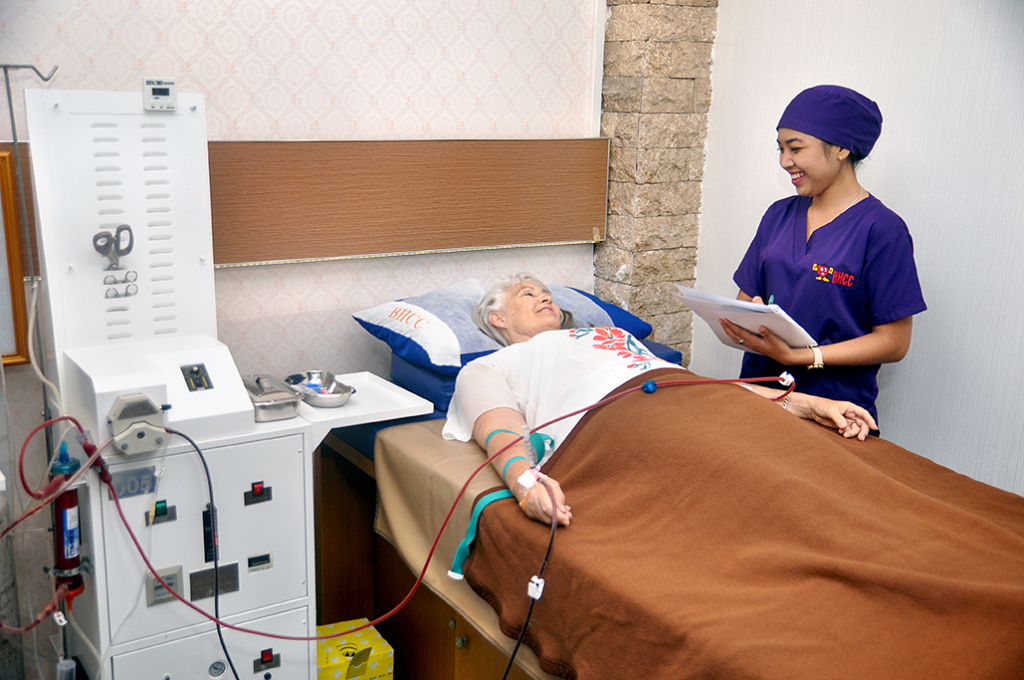
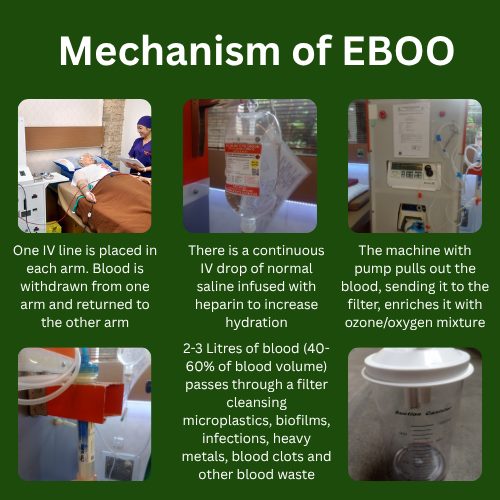
BHCC Clinic in Bali uses the most advanced method of ozone therapy, capable of infusing 210-420 mg of continuous oxygen-ozone gas into the bloodstream while detoxifying 2-3 liters of blood, removing harmful toxins, and thus delivering the highest level of health benefits.
EBOO enhances oxygen utilization, stimulates the body’s natural healing processes, strengthens the immune system, and kills pathogens. Main health benefits include:
- Tissue Regeneration
- Immune System Support
- Pain Reduction
- Pathogen Elimination
- Reduced Inflammation
During the 1 hour process, 2-3 liters of your blood through dialysis process go through:
-
Ozonation
The process of enriching your blood with the mixture of Oxygen-Ozone (O3). The ozonated blood is then continuously returned to the bloodstream via bloodline to the person’s vein. This Oxygen-Ozone infused blood then stimulates natural healing process. Deep healing at cellular level is activated in this process, which then enhances oxygen utilization, dramatically reduces inflammation, and removes pathogens.
2. Detoxification and Filtration
A filtration system is used to remove harmful substances and blood waste, including toxins, biofilms, blood clots, microplastics and heavy metals.
Other Reported Health Benefits of EBOO:
- Reducing Covid spike protein and associated toxin-like peptides
- Inactivating viruses, bacteria, fungi, yeast, parasites and protozoa
- Increase energy and metabolism by accelerating energy (ATP) production
- Stimulates anti-inflammatory effects
- Improve athletic performance & recovery