
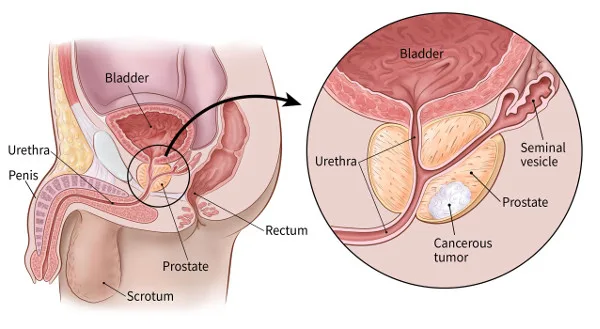
Prostate cancer is a growth of cells that starts in the prostate. The prostate is a small gland that assists in making the fluid part of semen. Abnormal growth of prostate tissue is usually detected through screening tests, usually blood tests for Prostate Specific Antigen (PSA) levels. Diagnosis requires a biopsy of a prostate.
Prostate cancer is one of the most common types of cancer in Australia. In 2025, according to canceraustralia.gov.au, it is estimated that 28,868 new cases of prostate cancer will be diagnosed in Australia. This cancer is usually found early and grows slowly. If cancer is present, the pathologist assigns a Gleason score, a higher score represents a more aggressive tumor.
People diagnosed with early prostate cancer have a lot of options to consider. Most prostate tumors remain small and don’t cause any health problem. Active surveillance is required to monitor that the tumor has not grown.
Symptoms of Prostate Cancer
Prostate cancer might not show symptoms at first. The good news is, most prostate cancers are found at an early stage in Australia. These might be early signs of prostate cancer:
- Blood in the urine, which might make the urine look pink, red or cola-colored
- Blood in the semen
- Needing to urinate more often
- Difficulty in urinating
- Waking up at night to urinate frequently
Some aggressive tumors metastasize (spread) to other parts of the body, particularly the bones and lymph nodes. In that case, tumors cause severe bone pain, leg weakness or paralysis, and eventually death.
Signs and symptoms of advanced Prostate cancer:
- Accidental urine leaking
- Back pain
- Bone pain
- Erectyle dysfunction
- Fatigue
Protocols of Bali’s Health Care Center (BHCC) for Prostate Cancer
- Ozone Therapy:
Helps to induce Reactive Oxygen Species (ROS) Anti-Cancer Effects, Helps to exhibit Selective Toxicity in Cancer Cells, Helps to induce cancer cell death by causing mitochondrial disruption
Helps to Trigger G2/M Cell Cycle Arrest of Cancer Cells, Have Synergistic Effect with Medical Treatment and Helps to Minimize Medical Treatment’s Side Effects.
3. Dome Germanium Treatment: Helps to improve immune system
4. Hydrocolon Therapy: Helps to stimulate peristalsis and immune function, Helps to break down hardened fecal matter, Helps to purges parasites
5. Car T Cell Therapy
Research of Tian Xian Liquid (TXL) Towards Cancer

TXL has been used in international market for cancer patients since 1991. Today, the research of TXL has produced 26 research articles that are published in international journal, including 2 clinical trials (one for Breast Cancer in Taiwan National Hospital and the other for Nasopharyngeal Cancer in Dharmais Cancer Hospital Jakarta). TXL has also made it to the dictionary of American National Cancer Institute (NCI).

According to the entry, TXL (or THL in Taiwanese pronounciation), has potential antioxidant, immunomodulating and anti-neoplastic (anti-cancer) activities. The immunomodulating function includes modulating the activity of Natural Killer (NK) cells and Cytotoxic T-Lymphocytes (CTLs).
In summary, here’s a couple of TXL’s functions:
1. Helps to Induce Apoptosis (Programmed Cell Death) of Prostate Cancer Cells
In 2005, the research of Andy Sun’s team from National Taiwan University regarding TXL’s ability to inhibit cancer cell growth and induces apoptosis (programmed cell death) in a wide variety of human cancer cells was published by the Journal of Alternative & Complementary Medicine.
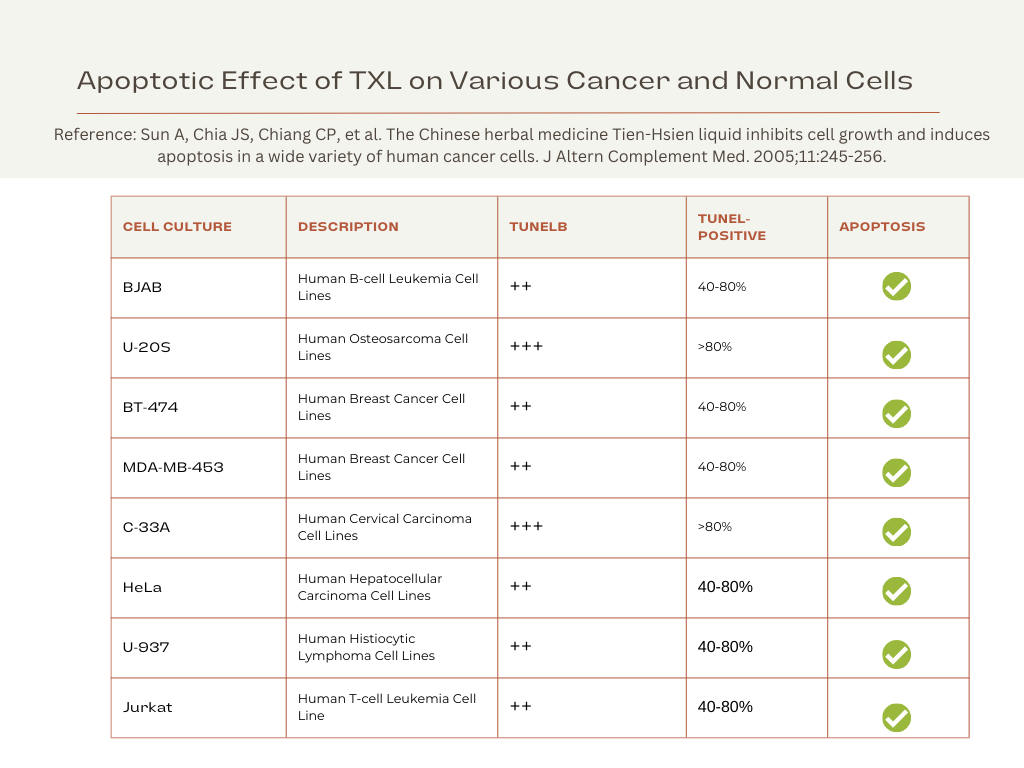
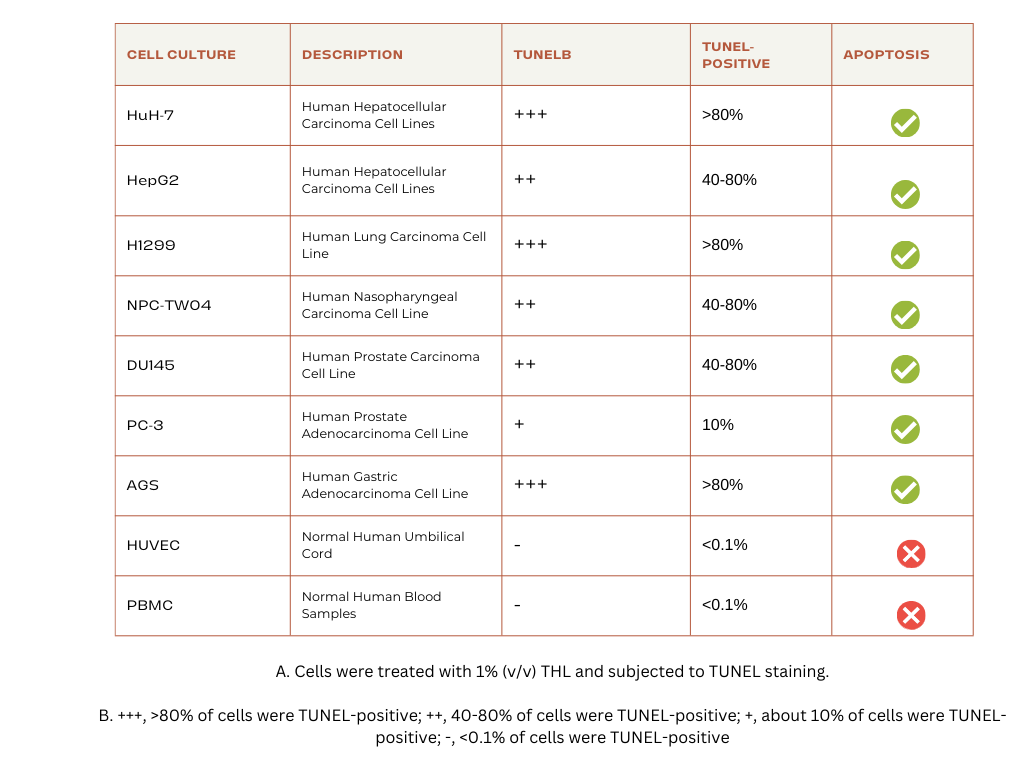
Results: TXL could induce apoptosis in all human cancer cell lines tested but not in normal human cells. THL treatment of H1299 cancer cells resulted in activation of caspase-8, -9, and -3 and the inhibitors of these caspases could partially block TXL-induced apoptosis.
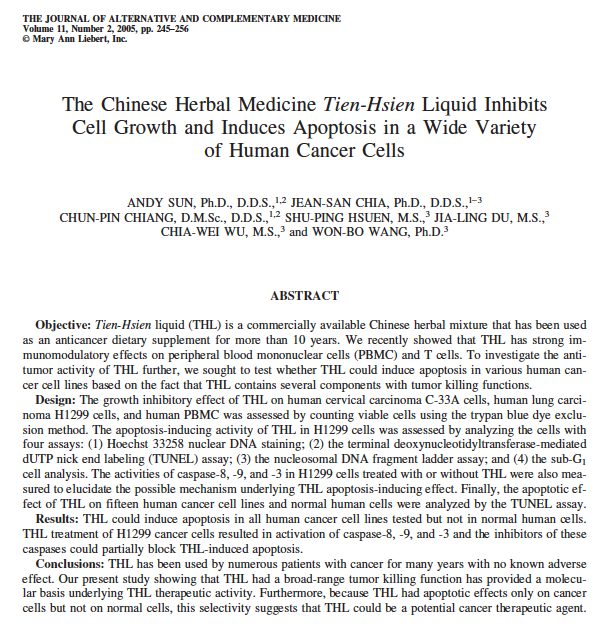
The research found that TXL induces apoptosis (programmed cell death) in a wide variety of human cancer cells, including Human Prostate Carcinoma.
2. Helps to Trigger G2/M Cell Cycle Arrest of Cancer Cells
3. Have Synergistic Effect with Medical Treatment and Helps to Minimize Medical Treatment’s Side Effects. Helps to Improve Patients’ Quality of Life
4. Helps to Inhibit Metastasis and Angiogenesis of Cancer Cells
5. Helps to Modulate Immune System (Natural Killer Cells and Cytotoxic T-Lymphocytes)
Experience from Prostate Cancer Survivor with TXL
Cancer is not Terrible
Disclaimer: The result of TXL consumption vary among individuals. There is no guarantee for specific results. All the information presented in this website is only for education purposes and does not replace medical advices from medical professionals.

Mr. Sun Kosawisut from Thailand
Cancer is not as terrible as people usually imagine; whether the symptoms of cancer mean getting better or worse depend on the attitude of each patient. The most important of all is to keep an optimistic mood. There is still hope in your life, and you must insist on the spirit of fighting!
Whenever a doctor diagnoses a patient and says, “You have cancer!” it is like you are suddenly pronounced judgment by acriminal court to execute by shooting at the prescript time before you have a chance to know anything about it. Some patients may pass out, or stupefy, pale, or their four limbs may become soft and weak because your life will change completely from then on.
Life is like shrouded by a dark chaos and makes you lose your intellect so that you are surrounded by depression, sadness,frustration, disappointment, lonesome and loneliness. What you think every day is that your life is going to end soon and you are getting closer to your grave!
But my nine-year experience makes me realize that cancer is not as terrible as most people think; some cancer can be curable. The most important part is whether the patient has confidence in himself or herself and whether she or he can treat it right.
I got cancer in 2001 when I went to see a doctor for hematuria; the test result showed that my PSA was up to 69ng/ml. Besides, I took digital rectal examination, and the doctor said that the possibility of getting cancer was quite high for me because my prostate extended and the symptom of elevated PSA.
I was very surprised, quite afraid and at a loss; my whole family was like shrouding under a dark and tremendous cloud and it was “dark” everywhere. About one month later, I gradually began to accept the reality. Everyone in my family encouraged me one after another, and they even held a meeting to draft fighting cancer plans.
Four treatment plans were pose for me by the doctor; first, radical prostatectomy or surgical remove testicle; second, radiotherapy; third, chemotherapy; four, taking hormone. I did not want to take the former three ways because I was too old to take risks. So, I took CASODEXA every day and TXL at the same time.
After four or five months, my PSA was gradually dropping when I had physical exam, and the other symptoms were improving. Because I was worrying that side effects might cause my quality of life to fall and weaken my immunity, I have never taken surgery or other treatment.
The doctor gave me another medicine called ENANTONE later; it was an intramuscular injection and I have used 3.75 milligram every month until now. The recent physical exam I took was in June of 2003, the result showed my PSA dropped to 3.7ng/ml and it was at the normal range.
The MRI exam in December of 2002 showed my prostate shrank to the size of 4.6 x 3.4 x 4.2 cm (when I took CT SCAN exam on March 5th, 2003, the size of prostate was 7 x 7 x 5 cm.) I was quite satisfied with the above treatment result. I once read a medical research report and the statistics showed ten percent of cancer patients restore health through their own efforts; there exist self- adjustable cells and increasing immunity function inside our bodies.
It has been nine years since my disease flared up. Now, everything in my life is normal; I just did not forget that I am still a cancer patient. From the experience of fighting against cancer for years, I could share what has inspired me with cancer friends:
- Your psychology is the key. Cancer patients must relax their frame of mind, do not get anxious, sorrowful, and angry; keep optimistic, try to laugh more, keep your body relaxed, read some books or plant some trees when you have free time, or you can listen to music.
- Keep good cooperation with the doctor in charge on your treatment (including western and Chinese medicine.)
- Avoid high fat diet, such as meat dishes, and try to eat more fish, vegetables, and fruits.
Ozone Treatment in Bali’s Health Care Center for Prostate Cancer
1. Ozone Induces Reactive Oxygen Species (ROS) Anti-Cancer Effects
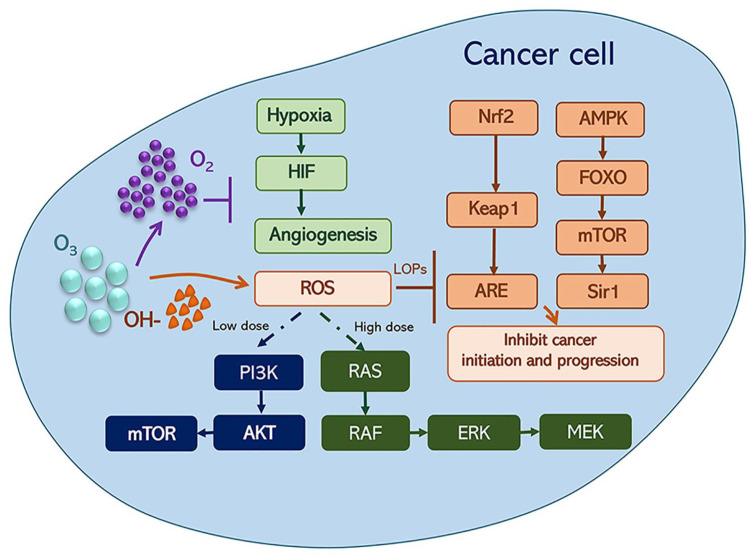
Ozone therapy exerts a range of effects when interacting with immune system, including the activation of immune responses, regulation of cytokine production, and modulation of inflammatory processes. The effects of ozone on macrophages, T cells, B cells, NK cells, and dendritic cells can be used in the treatment of infectious diseases, autoimmune disorders, and cancer immunotherapy. In clinical use, ozone therapy not only increases leukocyte activity and the immunoglobulin G (IgG) level in patients with selective immunoglobulin A deficiency, but ozone has also been shown to increase the production of both IL-8 and tumor necrosis factor alpha (TNF-α) in a human monocytic cell line (THP-1 cell) model.
In Figure1, Ozone (O3) can generate hydroxyl radical (OH−) and oxygen (O2), which could have anticancer effects by inducing reactive oxygen species (ROS) anticancer effect and relieving hypoxia. Light green labels: Oxygen relieves hypoxia. Hypoxia inhibits hypoxia-inducible factor (HIF) generation and angiogenesis; Brown labels: OH−-associated high-level ROS can block the activation of the Nrf2/Keap1/ARE and AMPK/FOXO/mTOR/Sir1 pathways. Dark blue labels: Low doses of ROS activate the PI3K/Akt pathway; Dark green labels: High doses of ROS can trigger MAPK-dependent apoptosis.
Abbreviations: AMPK, adenosine monophosphate-activated protein kinase; ARE, antioxidant response element; ERK, extracellular signal-regulated kinase; FOXO, forkhead box O; HIF, hypoxia-inducible factor; Keap1, Kelch-like ECH-associated protein 1; LOPs, lipid oxidation products; MEK, mitogen-activated protein kinase kinase; mTOR, mammalian target of rapamycin; Nrf2, nuclear factor erythroid 2–related factor 2; PI3K, phosphatidylinositol-3-kinase; RAF, rapidly accelerated fibrosarcoma kinase; RAS, rat sarcoma; ROS, reactive oxygen species; Sir1, Saccharomyces cerevisiae protein.
Due to its immunomodulatory and anti-inflammatory effects, ozone affects the tumor microenvironment (TME), which plays a critical role in cancer initiation, progression, and response to therapy. Ozone affects the TME by influencing immune cells, cytokine production, angiogenesis, and extracellular matrix remodeling. Thus, understanding the immunomodulatory effects of ozone therapy could facilitate its integration into disease management, either as a standalone therapy or as an adjuvant to existing therapy.
 Moreover, Ozone also modulates pro- and anti-angiogenic factors, influences endothelial cells, remodels the extracellular matrix, and regulates angiogenesis by modulating vascular endothelial growth factor (VEGF) expression, which offers potential therapeutic benefits in wound healing, ischemic conditions, and tissue regeneration.
2. Ozone Therapy Exhibits Selective Toxicity in Cancer Cells
Cancer cells’ selective vulnerability to ozone-induced ROS lies in their diminished antioxidant capacity. Unlike normal cells, which possess a robust antioxidant defense system, cancer cells often lack sufficient levels of enzymes like SOD and catalase, which neutralize ROS. This deficiency makes them more susceptible to the oxidative effects of ozone, while healthy cells can typically withstand low to moderate levels of oxidative stress.
Studies have demonstrated that ozone exposure leads to a concentration- dependent increase in ROS within cancer cells, resulting in oxidative damage that triggers apoptosis. Apoptosis, or programmed cell death, is a controlled process that eliminates damaged cells without causing inflammation—a critical advantage in the tumor microenvironment, where uncontrolled cell death can exacerbate disease progression.
3. Mitochondrial Impact & Apoptosis
Ozone induces cell death by causing mitochondrial disruption. The mitochondria are critical for energy production in cells, and their membranes are particularly sensitive to oxidative damage. When ROS levels rise, they can compromise the mitochondrial membrane potential, leading to the release of pro-apoptotic factors like cytochrome c. Once in the cytosol, cytochrome c activates caspase enzymes, which break down cellular components and ultimately lead to apoptosis.
This mitochondrial-targeting effect of ozone is particularly effective against cancer cells, which depend on altered mitochondrial function to sustain their rapid growth. By targeting and disrupting these energy-producing organelles, ozone therapy impairs cancer cell proliferation while sparing healthy cells that can restore their mitochondrial function more efficiently.
High-dose ozone therapy induces apoptosis across a variety of cancer cell types, including breast, lung, colorectal, and cervical cancers. This apoptotic process is initiated by elevated levels of ROS, which cause oxidative damage to cellular membranes, proteins, and nucleic acids. In studies on breast cancer cell lines, ozone exposure resulted in dose- dependent cell death, with higher concentrations of ozone generating more substantial ROS production and apoptosis. These findings align with similar observations in lung cancer and melanoma cells, where ozone-induced apoptosis has been shown to limit cancer cell proliferation without affecting surrounding healthy tissue.
4. Synergy with Chemotherapy
Ozone’s synergy with chemotherapy drugs like cisplatin and 5-fluorouracil has notable benefits, as it enhances drug uptake in cancer cells and amplifies cytotoxic effects. This synergy is especially valuable in patients who experience severe side effects from high doses of chemotherapy. By integrating ozone therapy, clinicians may be able to reduce the dosage of chemotherapy drugs, mitigating adverse effects while maintaining therapeutic efficacy. In clinical studies on cervical cancer, patients receiving combined ozone and radiotherapy exhibited significant reductions in tumor volume and lower gastrointestinal toxicity compared to those receiving radiotherapy alone.
In vitro studies on colorectal cancer cells have shown that ozone therapy enhances the effects of chemotherapy by disrupting cancer cell membranes and facilitating drug entry. This disruption weakens cancer cell defenses, allowing chemotherapeutic agents to achieve higher intracellular concentrations and induce greater cytotoxicity.
5. Tumor Oxygenation
One of the major challenges in oncology is overcoming hypoxia (the state of oxygen deprivation) within the tumor microenvironment, as low oxygen levels contribute to treatment resistance. Ozone therapy has demonstrated a significant capacity to increase oxygenation in hypoxic tumors, thereby enhancing the effectiveness of radiotherapy. In glioblastoma, an aggressive and highly hypoxic tumor type, increased oxygenation from ozone therapy sensitizes cells to radiation by promoting ROS formation during radiotherapy, which amplifies DNA damage in cancer cells and reduces hypoxia-driven resistance mechanism.
Ozone’s ability to improve oxygen diffusion is also valuable in poorly vascularized tumors, which benefit from enhanced blood flow and oxygen supply. By reversing hypoxic conditions, ozone creates a more favorable environment for both chemotherapy and radiotherapy, improving their efficacy against otherwise resistant cancer cells.
6. Immunological Modulation
Ozone therapy has been shown to activate immune responses by increasing ROS production, which stimulates the activity of immune cells like macrophages, dendritic cells, and natural killer (NK) cells. These immune responses are crucial for identifying and destroying tumor cells. ROS from ozone therapy act as signaling molecules that enhance the release of pro-inflammatory cytokines, such as TNF-α and IFN-γ, creating an immune-activated environment conducive to anti-tumor responses.
Studies in immunocompromised oncology patients have shown that ozone therapy can reduce markers of inflammation and support immune recovery, which is beneficial for patients undergoing treatments that suppress immune function, such as chemotherapy. These immunomodulatory effects suggest that ozone therapy could complement existing cancer immunotherapies, enhancing their efficacy and potentially expanding their applicability.
7. Reduction of Toxic Side-Effects
Ozone therapy has been associated with significant improvements in quality of life by reducing common side effects of cancer treatments, including fatigue, nausea, pain, and gastrointestinal issues. These symptoms are often exacerbated by chemotherapy and radiotherapy, which contribute to a decline in patient compliance and well- being. Clinical studies have shown that ozone therapy alleviates these symptoms, allowing patients to better tolerate and adhere to their treatment regimens.
The safety profile of ozone therapy is favorable, with minimal adverse effects reported in clinical studies. Ozone selectively targets cancer cells while sparing healthy cells, making it a viable adjuvant to conventional treatments. Patients who receive ozone therapy experience fewer treatment interruptions, faster recovery, and improved physical resilience, which collectively contribute to better outcomes in oncology settings.
Extracorporeal Blood Oxygenation & Ozonation (EBOO) in Bali’s Health Care Center Clinic
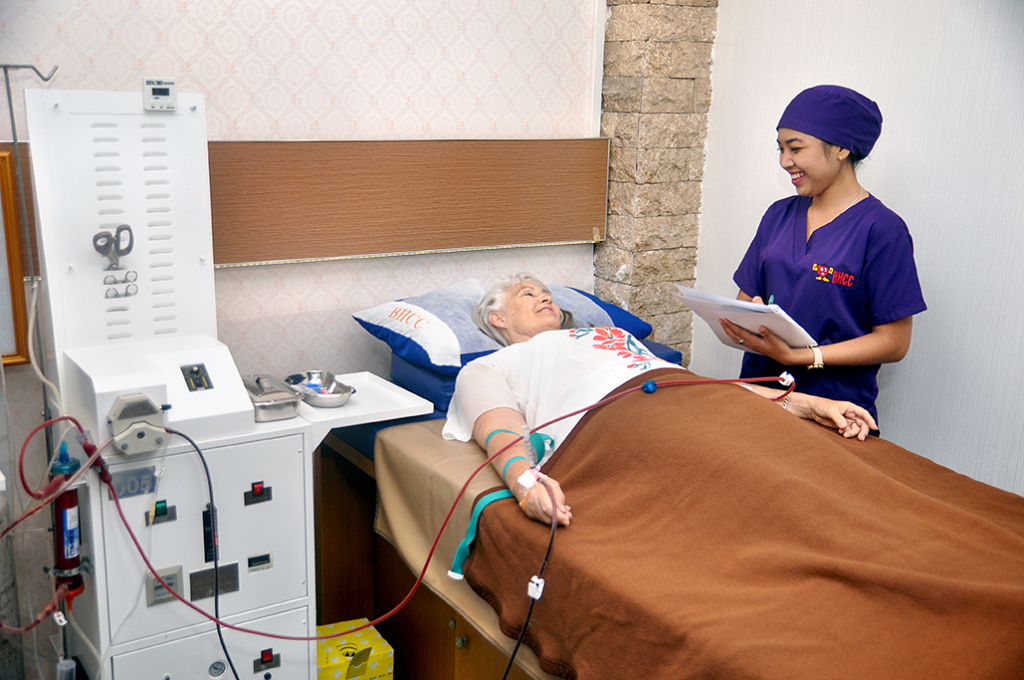
BHCC Clinic in Bali uses the most advanced method of ozone therapy, capable of infusing 210-420 mg of continuous oxygen-ozone gas into the bloodstream while detoxifying 2-3 liters of blood, removing harmful toxins, and thus delivering the highest level of health benefits.
EBOO enhances oxygen utilization, stimulates the body’s natural healing processes, strengthens the immune system, and kills pathogens. Main health benefits include:
- Tissue Regeneration
- Immune System Support
- Pain Reduction
- Pathogen Elimination
- Reduced Inflammation
During the 1 hour process, 2-3 liters of your blood through dialysis process go through:
-
Ozonation
The process of enriching your blood with the mixture of Oxygen-Ozone (O3). The ozonated blood is then continuously returned to the bloodstream via bloodline to the person’s vein. This Oxygen-Ozone infused blood then stimulates natural healing process. Deep healing at cellular level is activated in this process, which then enhances oxygen utilization, dramatically reduces inflammation, and removes pathogens.
2. Detoxification and Filtration
A filtration system is used to remove harmful substances and blood waste, including toxins, biofilms, blood clots, microplastics and heavy metals.